
The HUID System: How a Six-Digit Code Transformed India's Gold Trade
1 May 2024
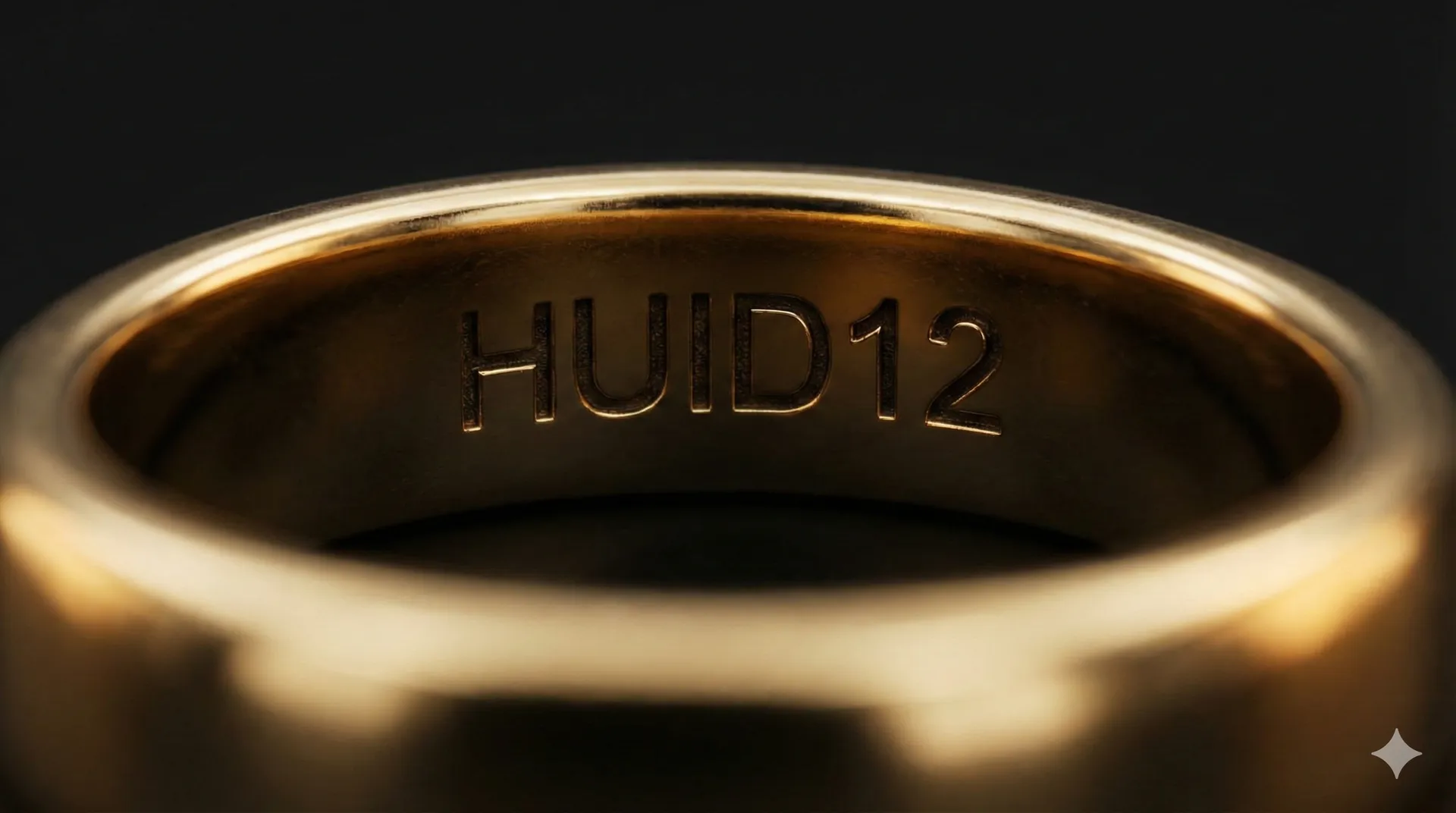
The Hallmark Unique Identification (HUID) system, launched on 1 July 2021, is arguably the most transformative change in India's hallmarking history. It replaced a batch-level marking system with piece-level digital traceability, a technical leap that has fundamentally changed how gold is traded, verified, and trusted in India.
What HUID Replaced
Under the old four-mark system, every gold article from the same jeweller, hallmarked at the same centre, bore identical marks. There was no way to distinguish one 22K ring from another in terms of traceability. The marks confirmed that articles from a particular jeweller had been tested, but they could not trace a specific piece to its individual test result.
How HUID Works
When a gold article passes assaying at an authorized hallmarking centre, the centre uploads the test data to BIS's online portal (manakonline.in). BIS assigns a unique six-digit alphanumeric HUID, a code that has never been used before and will never be reused.
This HUID is then physically stamped or laser-engraved on the article alongside the BIS logo and the purity/fineness number. The three-mark hallmark, BIS logo, purity, HUID, replaces the old four-mark system entirely.
The Digital Record
Each HUID links to a digital record in BIS's central database containing the tested purity and fineness, the identity of the hallmarking centre, the registered jeweller's details, the date and time of hallmarking, and the article's physical characteristics.
This means every hallmarked gold article in India can be individually traced from the testing lab to the consumer.
The BIS Care App
Consumer verification is handled through the BIS Care app, available free on Android and iOS in 12 languages (10 regional languages plus Hindi and English). Users enter or scan the HUID code to view the article's certified details instantly. The app also supports complaint registration with photographic evidence.
Implementation Challenges
The HUID rollout was not without friction. In the early months, hallmarking centres were limited to processing 150–200 pieces per day under the new system. Jewellers reported longer turnaround times, damage to finished articles during the stamping process, and supply chain disruptions.
Small, unorganised jewellers were disproportionately impacted, as the administrative requirements of uploading data to the BIS portal represented a significant new burden. Industry representatives described "huge unrest" during the initial transition.
BIS responded by providing a grace period for non-compliance during the first months, progressively improving the online portal's capacity, and working with hallmarking centres to optimise throughput.
Scale Achieved
By February 2026, the HUID system had processed approximately 58 crore (580 million) individual articles. BIS was assigning roughly 1 crore HUIDs per month, demonstrating both the system's scalability and the industry's adaptation.
The Anti-Fraud Frontier
In 2026, BIS launched a pilot project in 25 centres to capture the image and weight of each jewellery article along with the HUID. This adds another layer of verification, making it significantly harder to create duplicate or fraudulent HUIDs. A nationwide rollout may follow based on pilot results.
Global Significance
India's HUID system is unique globally. No other country has implemented piece-level digital traceability for hallmarked jewellery at this scale. The system serves as a model for other nations considering how to bring digital accountability to their precious metal markets.
Continue reading
Explore more articles on hallmarking, testing, and the precious metals industry.