
Technology & Process
Every hallmark we stamp is backed by calibrated instrumentation, validated methodology, and strict adherence to BIS protocols. From X-ray fluorescence spectrometry to classical fire assay, our laboratory is equipped for precision at every level of analysis.
XRF Spectrometry
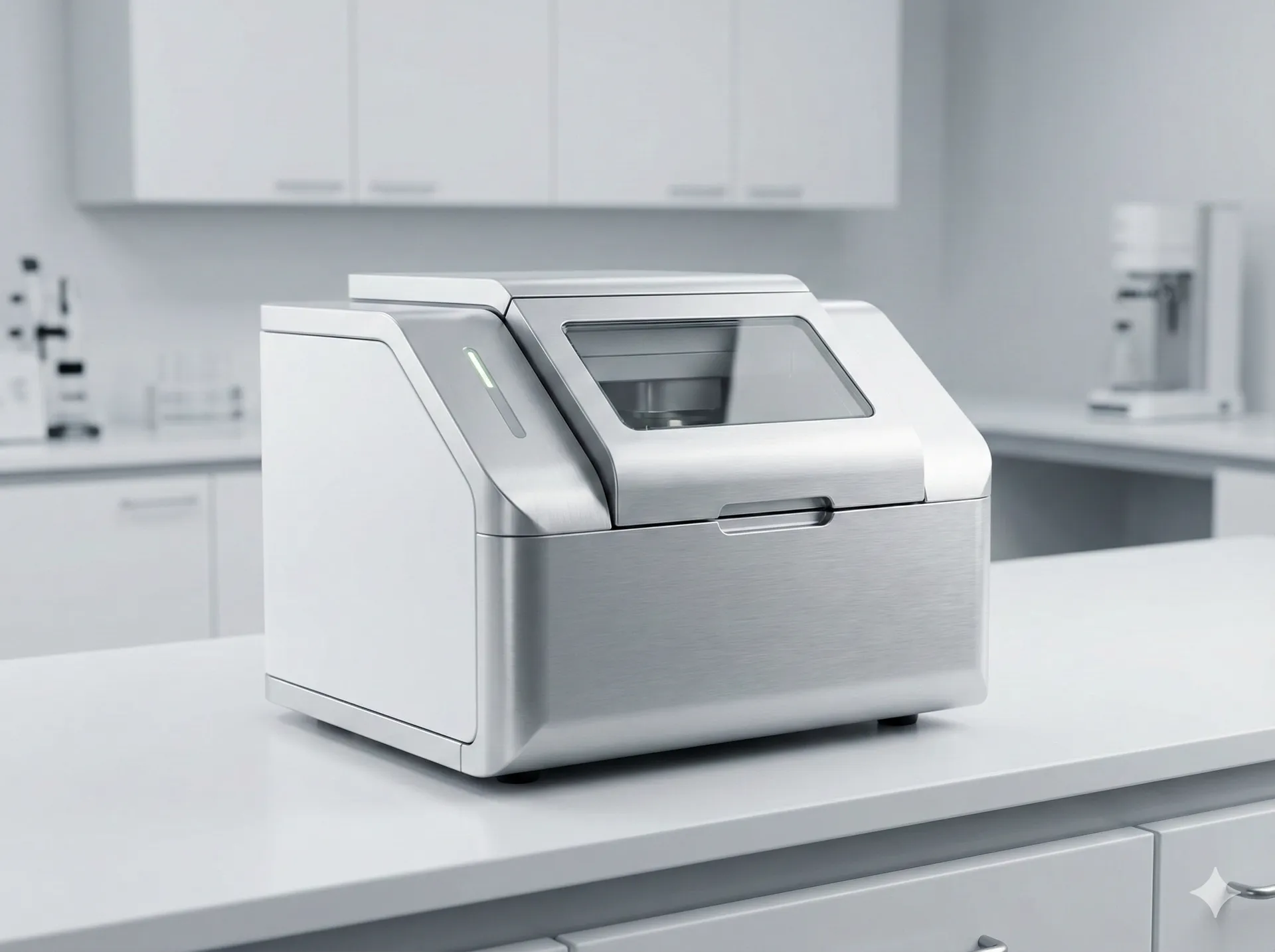
X-ray Fluorescence (XRF) spectrometry is the primary analytical method used at our centre for determining the elemental composition of gold and silver articles. It is a non-destructive technique, meaning the article under test is returned to the jeweller completely intact, with no material removed or altered.
How it works
X-ray excitation
The instrument directs a focused beam of primary X-rays at the surface of the article. These X-rays excite the atoms in the metal.
Secondary fluorescence
Each element in the alloy emits secondary (fluorescent) X-rays at energies unique to that element: gold, silver, copper, zinc, and other trace metals each produce a distinct signature.
Detection & quantification
A high-resolution detector captures these fluorescent X-rays. Software analyzes the energy spectrum to calculate the precise percentage of each element present.
Result & reporting
The composition is reported as fineness, for example, 916 for 22-karat gold (91.6% pure gold). Results are generated within minutes.
When XRF is used
XRF is the standard method for routine hallmarking of gold and silver jewellery and bullion. It is used for the vast majority of articles submitted to our centre. Because it is non-destructive, articles can be tested and returned without any physical alteration: no scratching, no sampling, no weight loss.

Fire Assay & Cupellation
Fire assay by cupellation is the classical, definitive method for determining the purity of precious metals. Recognized globally as the referee method, it is the benchmark against which all other techniques are validated.
The process
A small sample is taken from the article and weighed precisely.
The sample is wrapped in lead foil and placed in a cupel, a porous bone-ash cup, inside a high-temperature muffle furnace.
At temperatures exceeding 1,000 degrees Celsius, base metals oxidize and are absorbed by the cupel, leaving behind a bead of pure precious metal.
The remaining bead is weighed. The difference between the original sample weight and the bead weight determines the exact purity.
When fire assay is used
Fire assay is employed when XRF results are inconclusive, when there is a dispute between parties regarding purity, or when regulatory or contractual requirements specify the referee method.
Calibration & Quality Assurance
Accurate results depend on rigorous calibration and quality control. Our laboratory follows documented QA routines aligned with BIS norms and international best practices.
Certified Reference Materials
Our XRF instrument is calibrated using certified reference materials (CRMs) traceable to national and international metrological standards.
Daily Calibration Checks
Before any articles are tested each day, calibration verification is performed using control samples.
Periodic Proficiency Testing
Our laboratory participates in proficiency testing programmes where blind samples are analyzed and results compared against reference values.
BIS Norms Compliance
All testing and calibration procedures are aligned with the requirements set by the Bureau of Indian Standards.
Instrument Maintenance
The XRF spectrometer and fire assay equipment undergo scheduled preventive maintenance by qualified service engineers.
Documentation & Traceability
Every test result, calibration check, and maintenance event is logged. Complete traceability is maintained from sample receipt through testing and HUID assignment.
BIS & HUID Integration
Testing is only one part of the hallmarking process. Our workflow integrates directly with the BIS portal to ensure every hallmarked article receives its unique HUID and is fully traceable from lab to consumer.
Testing & Analysis
Each article is tested using XRF spectrometry (or fire assay when required). The elemental composition and fineness are determined and recorded.
BIS Portal Submission
Test results, article details, and jeweller information are submitted electronically to the BIS hallmarking portal in real time.
HUID Assignment
The BIS portal assigns a unique six-digit alphanumeric Hallmark Unique Identification Number (HUID) to each article that passes the purity threshold.
Hallmark Stamping
The hallmark, comprising the BIS logo, purity/fineness grade, and HUID, is physically stamped onto the article using a laser marking machine.
End-to-end traceability
The HUID enables any consumer, jeweller, or regulator to verify the authenticity and purity of a hallmarked article by looking up its unique code on the BIS Care app or website.
Questions about our process?
We are transparent about how we test and what our results mean. If you have questions about our instrumentation, methodology, or compliance, get in touch.
Contact us