
The Old Four-Mark Hallmark System: What It Was and Why It Changed
15 November 2023
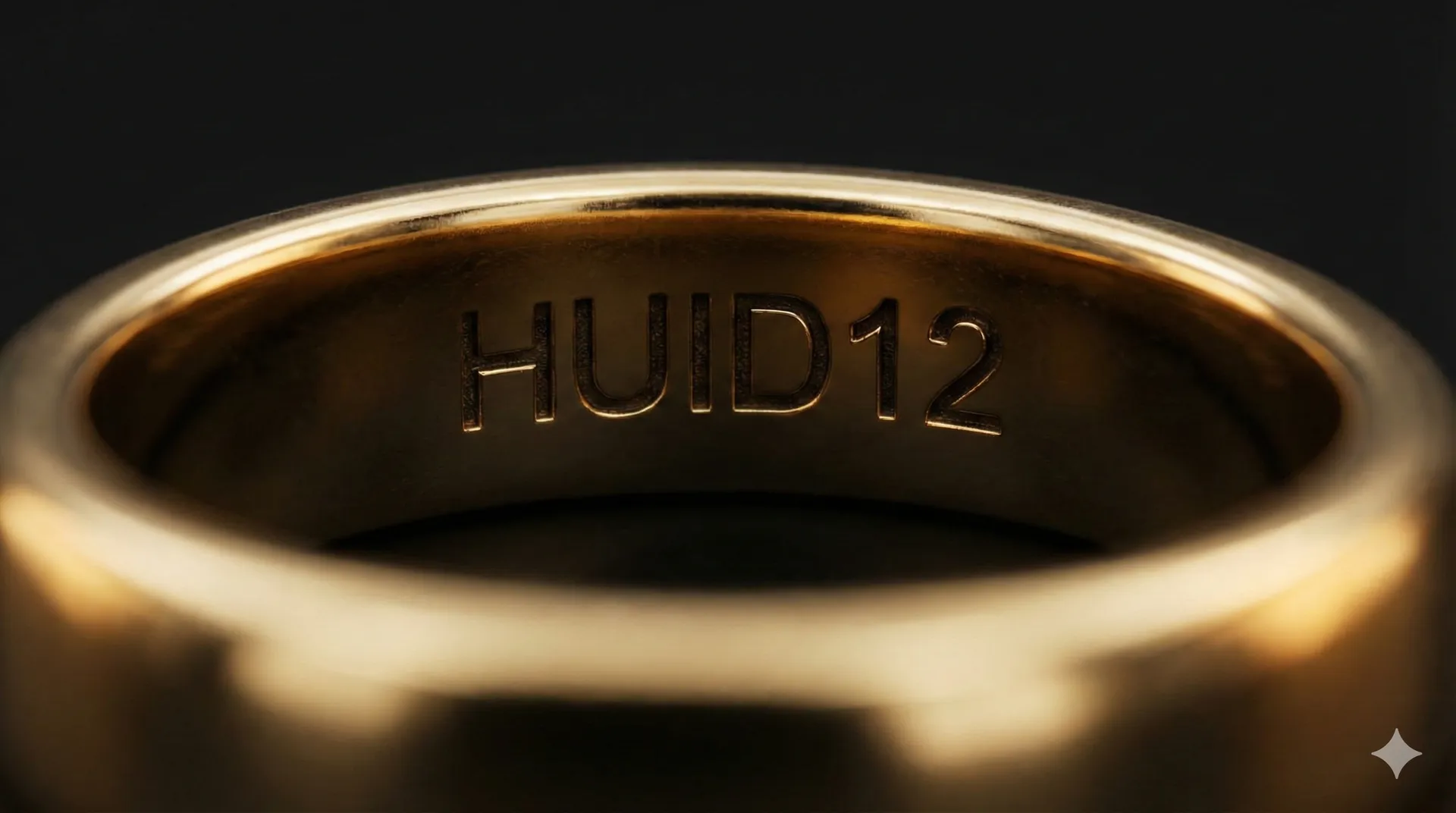
For over two decades, from April 2000 to June 2021, India's hallmarked gold jewellery bore a four-component mark. Understanding this legacy system helps explain why the HUID replacement was necessary and what it improved.
The Four Components
Every hallmarked gold article carried these four marks:
1. BIS Standard Mark, The triangular logo of the Bureau of Indian Standards, indicating that the article had been tested at a BIS-licensed centre. This mark was common to all hallmarked articles.
2. Purity/Fineness Mark, A number indicating the proportion of pure gold, expressed as either karat (e.g. 22K) or fineness (e.g. 916). This told the consumer exactly how much gold the article contained.
3. Hallmarking Centre's Identification, A number or logo identifying which Assaying and Hallmarking Centre had tested and hallmarked the article. This was meant to create accountability for the testing process.
4. Jeweller's Identification Mark, A unique logo or mark registered by the jeweller or manufacturer with BIS. Each certified jeweller had a distinct identification mark that was embossed on their hallmarked articles.
The Year-of-Marking Code
Before 1 January 2017, hallmarks also included a year code letter. The letter "A" denoted the year 2000, "B" for 2001, and so on through the alphabet. This fifth component was discontinued with the IS 1417:2016 revision, as digital record-keeping made physical year stamps redundant.
Why the System Changed
The four-mark system had a fundamental limitation: it was not piece-specific. Every gold article from the same jeweller, hallmarked at the same centre, bore identical marks. There was no way to trace a specific piece of jewellery to its individual test result or hallmarking date.
This lack of granular traceability created opportunities for misuse. Marks could be replicated, and there was no digital verification system for consumers to independently confirm a hallmark's authenticity.
The HUID Replacement
On 1 July 2021, BIS replaced the four-mark system with a three-mark system centred on the HUID (Hallmark Unique Identification Number):
New system: BIS logo + Purity/Fineness mark + 6-digit alphanumeric HUID
The HUID is unique to every single piece of jewellery. It links the physical article to a digital record in the BIS database containing the tested purity, the hallmarking centre's details, the jeweller's information, and the date of hallmarking. Consumers can verify any HUID instantly through the BIS Care app.
The Transition Period
The transition from old to new system was not instantaneous. Jewellers were initially allowed to sell existing stock bearing four-mark hallmarks. However, from 1 April 2023, the sale of gold jewellery with old four-mark hallmarks (without HUID) was prohibited. Jewellers holding old stock had to get it re-hallmarked with HUID before sale.
A Generational Shift
The move from the four-mark to the HUID system represents the most significant change in India's hallmarking history. It transformed hallmarking from a batch-level quality stamp into a piece-level digital traceability system, one of the most comprehensive in the world.
Continue reading
Explore more articles on hallmarking, testing, and the precious metals industry.