
BIS Starts Recording a Photo and Weight for Every Hallmarked Article
14 October 2025
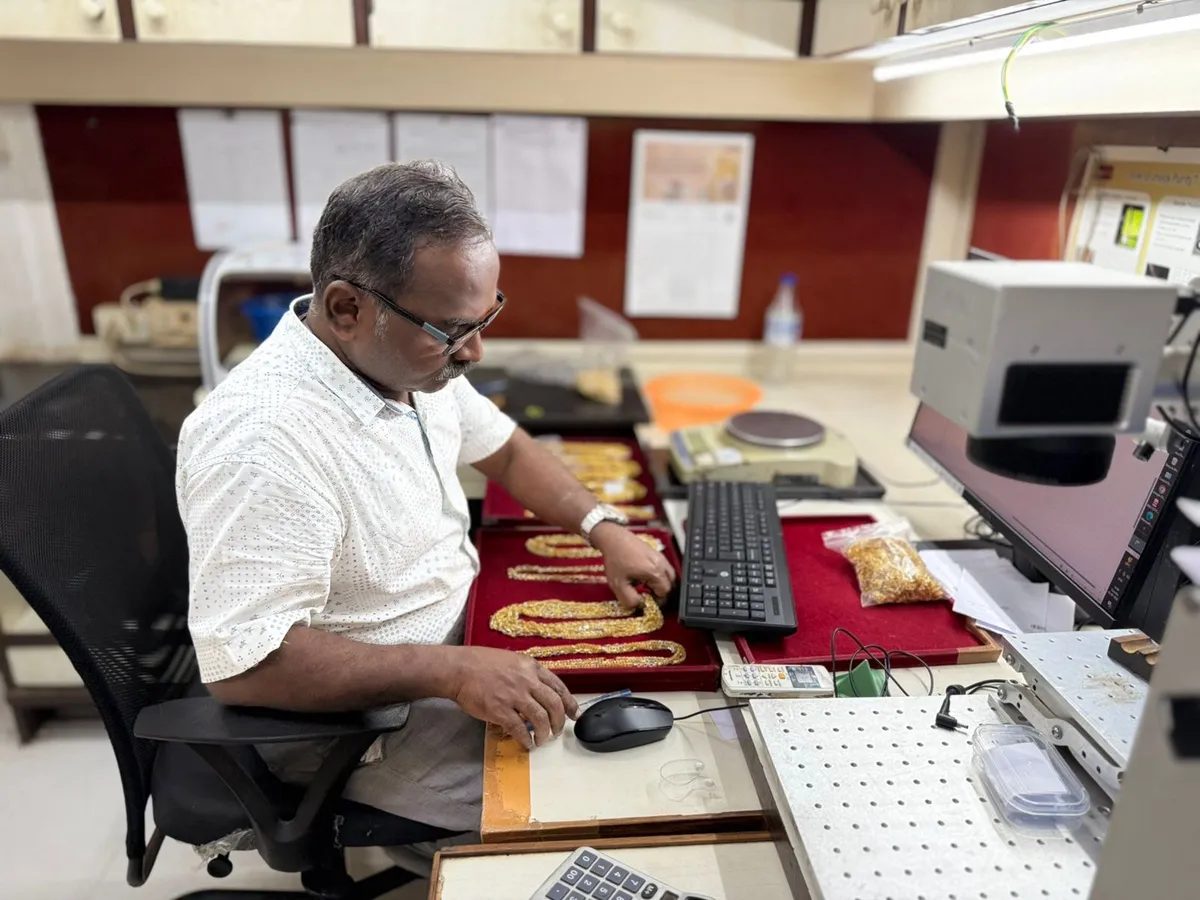
On 14 October 2025, World Standards Day, the Bureau of Indian Standards started photographing jewellery. At 25 assaying and hallmarking centres, every article submitted for hallmarking now has its image and weight recorded and tied to its HUID. BIS ran it as a one-month pilot before deciding on a wider rollout. It is a small change in the day-to-day work of a centre, but it closes a gap that has sat inside the HUID system since the number was introduced in 2021.
What the HUID could not do on its own
The six-digit HUID gives every hallmarked article a unique number linked to a database record: the tested purity, the centre that did the assay, the registered jeweller, and the date and time. What the record never held was any description of the physical object the number belonged to.
That matters more than it sounds. In the database, a HUID stamped on a 4-gram ring looked the same as that HUID moved onto an 8-gram ring. The number proved that an article had passed assay. It could not prove which one. There was nothing to check the stamped piece against.
That gap left room for a particular kind of fraud. A genuine HUID could be lifted from a light, low-value piece and re-stamped on a heavier article that had never been tested. A single HUID could be copied onto several pieces. Because the record carried no weight and no photograph, neither a consumer nor the BIS Care app had anything to compare against, so the swap stayed invisible.
What the pilot captures
At the 25 pilot centres, two things are added at the moment of hallmarking:
- A camera photographs the article together with its HUID mark.
- An electronic weighing balance, connected to the BIS portal, records the weight.
Both upload straight to that article's HUID record. The weight is read off the balance automatically rather than typed in, which removes the transcription slips that came with manual entry. The outcome is that a HUID now points to a specific object, of a specific weight, with a specific photograph, instead of a purity reading alone.
| The HUID record | Before the pilot | With image and weight |
|---|---|---|
| Tested purity / fineness | Yes | Yes |
| Hallmarking centre and jeweller | Yes | Yes |
| Date and time of hallmarking | Yes | Yes |
| Weight of the article | No | Yes |
| Photograph of the article | No | Yes |
How it changes verification
A buyer scans or types a HUID into the BIS Care app and, where this data has been captured, sees the photograph and the weight alongside the purity. That turns verification from a yes-or-no check into a comparison. A piece in hand that weighs 8 grams but whose record shows 4 grams and a different photograph is now an obvious mismatch, caught at the counter rather than months later. For the first time, the number on the article and the article itself have to agree.
What it means for centres and jewellers
The cost falls on the hallmarking centre's workflow. Each piece now has to be placed, photographed, and weighed on the linked balance before its data goes up, which adds a few seconds and some equipment to a process that already moves at scale. The point of running this at 25 centres first is to find out whether those few seconds hold up when the network is hallmarking lakhs of pieces on a working day. Jewellers see no new registration burden from this step, but they will deal with the occasional held piece where a stamped weight and a measured weight do not line up.
Where it sits in the bigger push
The image-and-weight pilot is one of several moves BIS made through 2025 and into 2026. Silver moved onto the HUID system under the revised IS 2112:2025 standard from 1 September 2025, still on a voluntary basis. Nine-karat gold entered the mandatory regime in July 2025. Plans for mandatory bullion hallmarking at the refinery level continue to advance. The common thread is tighter, piece-level traceability, and recording an image and weight is the step that finally binds a HUID to one physical object.
What to do as a buyer
Open the BIS Care app and check the HUID before you pay, not after. Where the photograph and weight are present, compare them to the piece in your hand and ask the jeweller to weigh it in front of you. Weight is the simplest cross-check of the three, and from this pilot onward it is part of the record the number is supposed to match.
Continue reading
Explore more articles on hallmarking, testing, and the precious metals industry.