
How XRF Testing Works in a Hallmarking Laboratory
20 January 2025
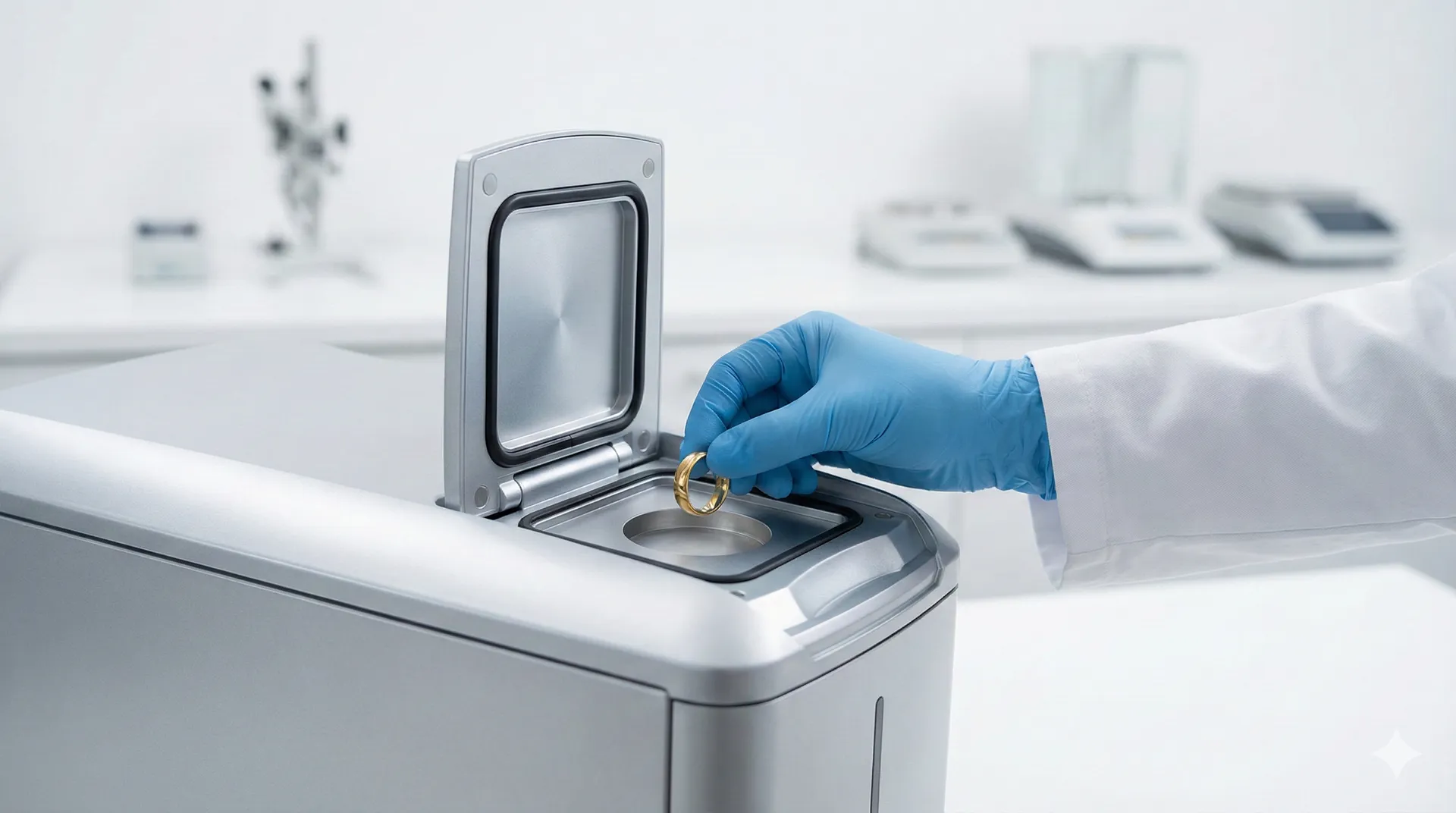
X-Ray Fluorescence (XRF) spectrometry is the primary analytical method used in BIS-authorized hallmarking centres for testing the purity of gold and silver articles.
The Science Behind XRF
XRF works on a fundamental principle of atomic physics. When a sample is irradiated with high-energy X-rays from the instrument's X-ray tube:
- The X-rays displace inner-shell electrons in the atoms of the sample
- Outer-shell electrons drop down to fill the vacancies, releasing energy
- This released energy (fluorescent X-rays) has a wavelength characteristic of each element
- A detector measures the energy and intensity of the fluorescent X-rays
- Software calculates the elemental composition based on these measurements
Why XRF Is Ideal for Hallmarking
- Non-destructive, the article is returned to the jeweller intact
- Fast, results in seconds to minutes
- Accurate, modern XRF systems achieve accuracy within ±0.1% for major elements
- Comprehensive, identifies all elements present, not just gold or silver
Calibration and Quality
XRF instruments in BIS-authorized centres are calibrated using certified reference materials traceable to national and international standards. Regular calibration checks are mandatory to ensure ongoing accuracy.
Limitations
XRF measures surface composition, typically to a depth of 10–50 micrometres depending on the element and energy. For articles suspected of having surface coatings or plating, complementary methods such as fire assay may be used.
Frequently Asked Questions
Laboratories test gold purity mainly by XRF (X-ray fluorescence) spectrometry, a fast, non-destructive method that reads the metal composition, and by fire assay for a definitive, highly accurate result. Hallmarking centres use both, calibrated to BIS standards.
XRF is accurate and reliable for surface composition and is ideal for fast, non-destructive screening. For a definitive result on the whole article, fire assay is the reference method. Hallmarking centres combine both.
Continue reading
Explore more articles on hallmarking, testing, and the precious metals industry.